The fish market in Cesenatico
How fish really works in Cesenatico: the 1911 fish hall, the wholesale auction no visitor sees, and the five signs that tell you the catch is fresh.
There are two fish markets in Cesenatico, and visitors only ever see one. We’ll take you through both, because it’s our trade: our mornings have started this way for forty years — and by the end of this page you’ll judge a fresh fish better than plenty of people who have been buying one all their lives.
La Pscaria, since 1911
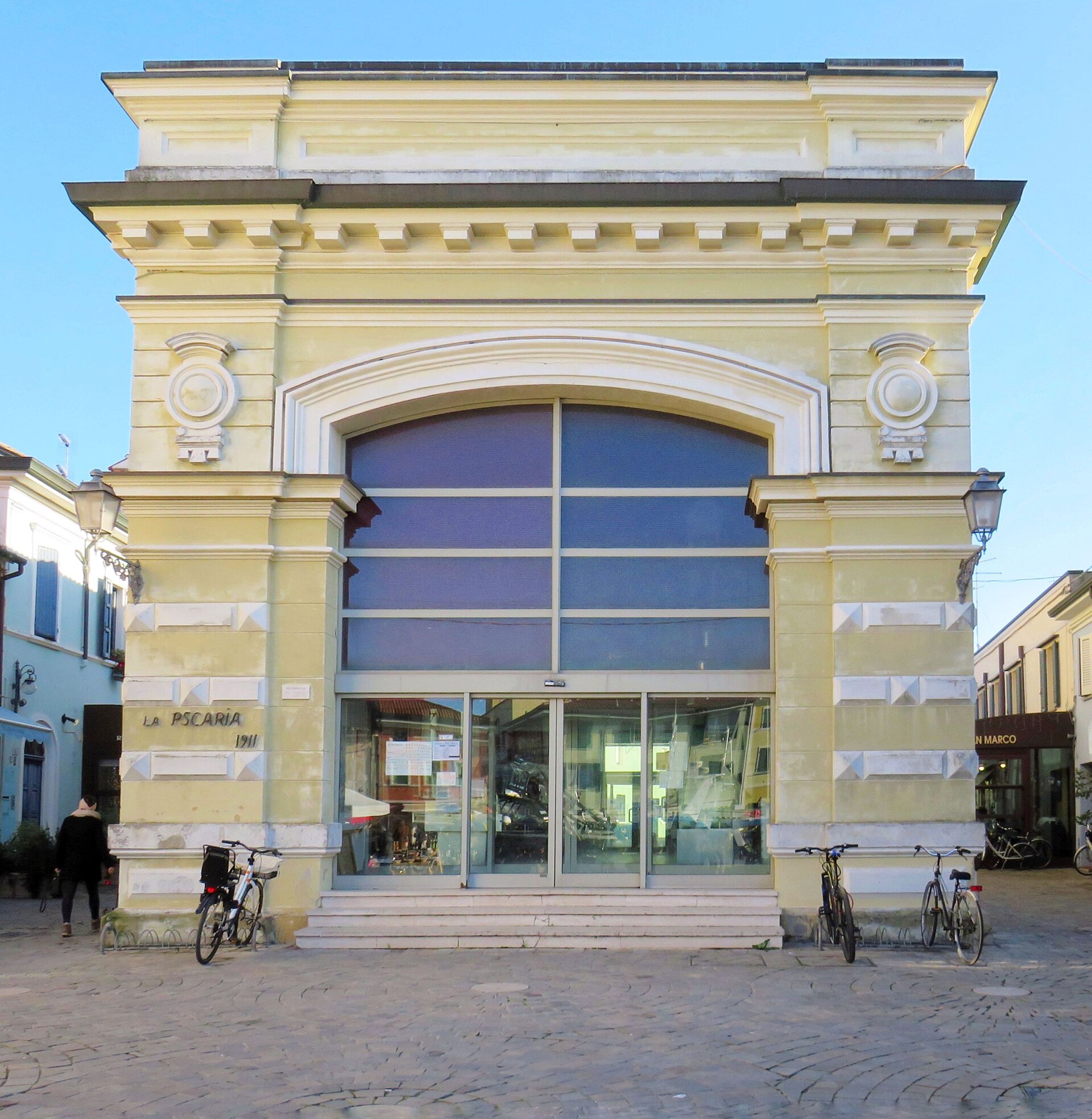
In the middle of the old town, on Piazzetta Fiorentini, there’s a yellow building with a wide arch and words carved into the stone: LA PSCARIA 1911. It’s the municipal fish hall, and it has been there for over a century.
The story is simple and says a lot about this town: fish used to be sold in the street, with all the mess you can imagine, so the council decided to give it a home. The design came from Amilcare Zavatti, the engineer who redrew half of Cesenatico between the late 1800s and the 1930s. What came out is a small, restrained Liberty-style building with a single hall: handsome without making a fuss.
The remarkable part is that it never became a museum. Fish is still sold inside, in the morning, over the counters. If you walk past, step in even just to look: five minutes there tell you what the Adriatic is giving this season, far better than any menu.
The auction you won’t see
The other market is the real one, where the fish actually changes hands, and it isn’t open to the public.
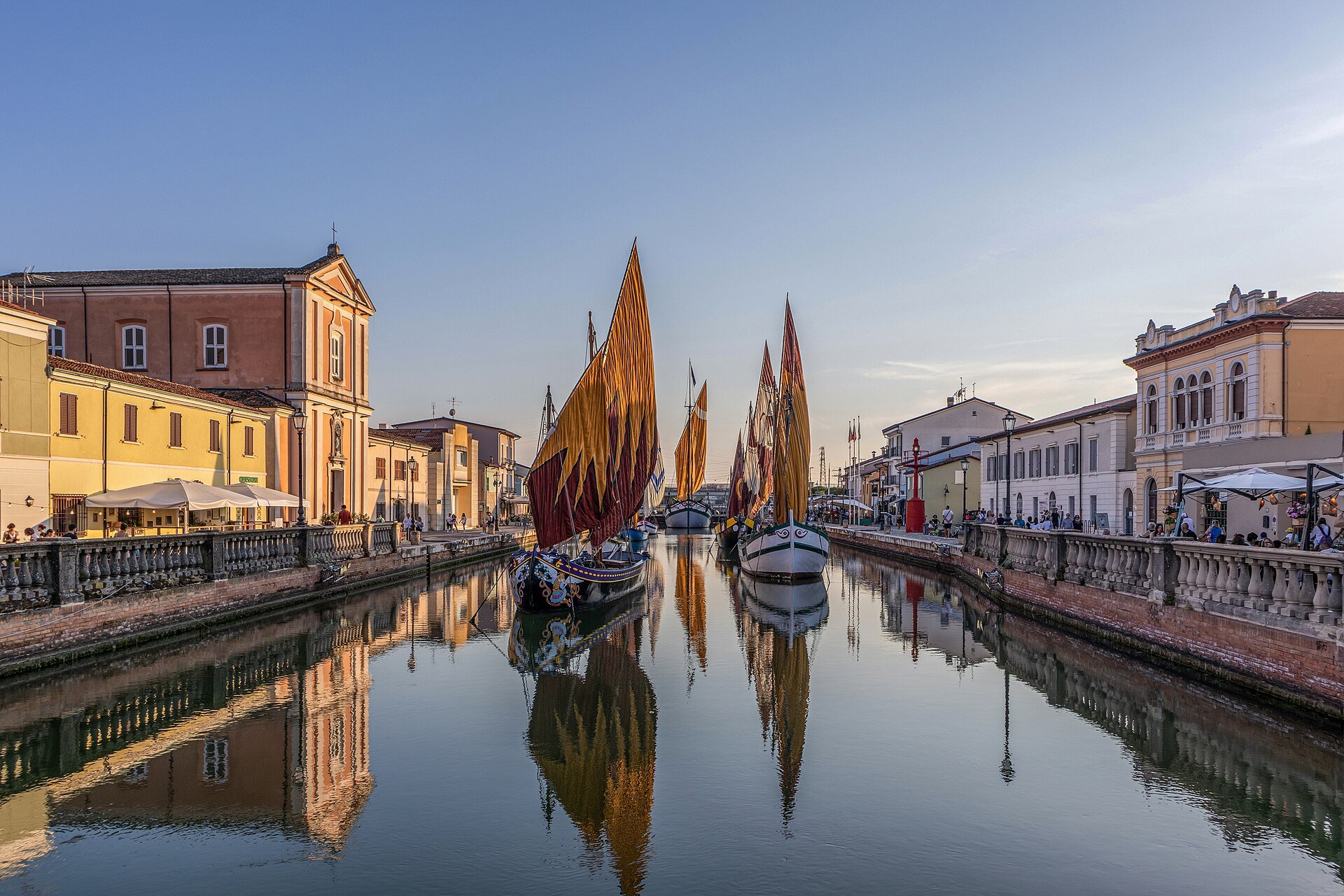
It sits at the far end of the canal harbour, at Via Matteucci 31: the wholesale fish market. The boats come in, the crates are unloaded, and in the early afternoon the bidding starts: first the voice auction, from around 1:35 pm with an acoustic signal, then the electronic one from 2:15 pm, Monday to Friday. You go in knowing what you want and you decide fast: what we buy there at half past one is what you’ll find on your plate that evening, or at lunch the next day at the latest.
It’s not a show for visitors: it’s a wholesale market, you buy with a licence, in an auction room where prices move in jumps. But knowing it exists, a few hundred metres from the restaurants on the canal, explains the difference between buying at the market and ordering by phone better than any sentence could.
Five signs of a fresh fish
This is the part worth the trip. Standing in front of a crate, we always check the same things, in the same order.
The eye. Full, convex, glossy, with a black pupil. Sunken and cloudy means that fish already has a few days behind it.
The gills. Lift the cover: they should be bright red or pink, moist, well separated. Brownish or clogged with mucus — walk away.
The flesh. Press it with a finger: it should spring back. If the dent stays, the fish is old.
Scales and skin. Tight, shiny, colours still vivid. The skin should look wet, not dry.
The smell. The most honest sign of all. Fresh fish smells of the sea, nothing else. If it smells *fishy* — that sharp smell everyone knows — you’re already too late.
One more thing we tell you reluctantly, but it’s fair you know: fresh doesn’t automatically mean local. At the Conserve square, a minute away, there’s a producers’ market most mornings; there as at the fishmonger’s, always ask where it came from. Anyone with good fish is happy to tell you.
What’s caught here, and when
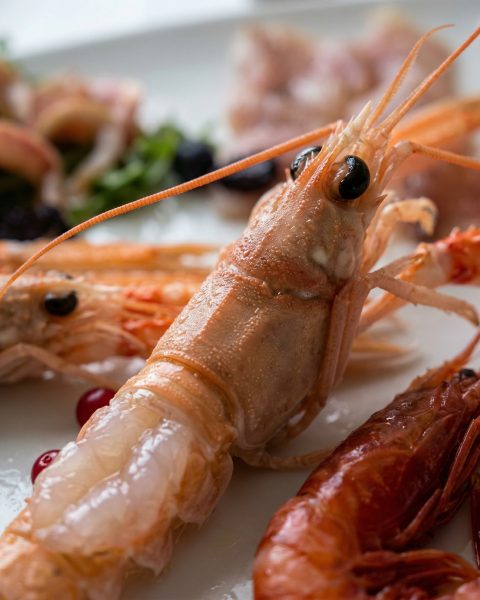
The Adriatic in front of us is shallow and sandy, and it gives a very particular catch: sole, mantis shrimp (packed full from November onwards), cuttlefish in spring, squid, king prawns, clams, and all the oily fish — sardines, anchovies, mackerel — which is the best of it and the cheapest.
In summer there’s something visitors rarely know about: the fishing stop. Trawlers stay in port by law — in 2026 from 31 July to 13 September along the stretch from Trieste to Ancona — so the sea can recover. Small boats, set nets and clam dredgers carry on: fish doesn’t disappear, it changes. In those weeks a serious kitchen shifts its menu accordingly — and it’s exactly when oily fish is at its best.
And if you haven’t got a kitchen
That’s the other good thing about a market: you look, you learn, and then somebody else cooks.
We buy the catch here every morning and treat it the way it has always been treated around here: not much on top, short cooking, whatever came in today. We’re in Villamarina, ten minutes from the centre — so if wandering past the counters has made you hungry for what you’ve just seen, you know where to find us. Seafood cooking since 1987.
Quick tips
- Municipal fish hall (“La Pscaria”, 1911): Piazzetta Fiorentini, old town. Counters open to the public in the morning; hours shift with the season.
- Wholesale fish market: Via Matteucci 31, at the end of the canal harbour. Voice auction from 1:35 pm, electronic from 2:15 pm, Monday to Friday: wholesale trade, buying requires a licence.
- Producers’ market: most mornings on Piazzetta delle Conserve.
- The five signs: convex glossy eye · red gills · flesh that springs back · tight scales · a smell of the sea, not of fish.
- 2026 fishing stop: trawling suspended from 31 July to 13 September (Trieste-Ancona stretch).
- At our place: La Romantica, Viale Carducci 319, Villamarina — fresh catch every morning. Book: +39 378 4227433.
You're already here. Stop by for a meal.
Fresh Adriatic fish every morning, Romagna home cooking since 1987. We'll get your table ready.
Frequently asked questions
Where can you buy fresh fish in Cesenatico?
At the municipal fish hall on Piazzetta Fiorentini, the 1911 building in the old town, where counters sell to the public in the morning, and at the town's fishmongers during the day. The wholesale market on Viale Matteucci, by contrast, is trade only.
Can you visit the fish auction in Cesenatico?
It's a wholesale market: buying requires a licence, and it isn't a visit for the public. The auction runs Monday to Friday — by voice from 1:35 pm, electronically from 2:15 pm — at Via Matteucci 31 (the market's official site). What anyone can see of the cycle is the boats coming back along the canal harbour and the counters at the municipal fish hall.
How do you tell if a fish is fresh?
A full, convex, glossy eye; bright red or pink gills, well separated; firm flesh that springs back when pressed; tight, shiny scales; a smell of the sea rather than a sharp fishy one. A sunken, cloudy eye or a strong smell means it isn't today's catch.
When is the fishing stop in Cesenatico?
In 2026 trawling stops from 31 July to 13 September along the Adriatic between Trieste and Ancona. The dates are set by decree and change every year. Small-scale fishing and clam boats keep working, so local fresh fish doesn't disappear — it changes.